
Beyond Black History Month, Leading Responsively
Culturally responsive leadership as a year-round, system work that goes beyond Black History Month to address disproportionality and advance equity for all learners.
Equity by Design

The ED&D team views culturally responsive leadership not as an initiative, but as a shared responsibility embedded in how systems are designed and decisions are made. Our work centers on designing conditions where equity is not aspirational, but operationalized through daily structures and supports.
Culturally responsive leadership means intentionally examining how policies, practices, and adult behaviors shape student access, opportunity, and outcomes. Leaders hold both design and disruption at the forefront: designing inclusive systems while disrupting inequities that persist over time.
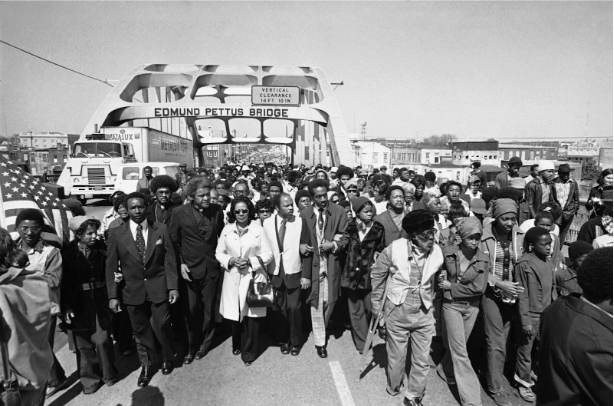
Civil rights demonstrators, led by Dr. Martin Luther King (5th R), civil rights activist Ralph Abernathy (5th L), John Lewis (3rd L) and other civil and religious leaders, make their way from Selma to Montgomery on March 22, 1965 in Alabama.
AFP/via Getty Images (2025)
Honoring Black History Month and Moving Beyond It
Black History Month offers an important opportunity to honor the contributions, resilience, and brilliance of Black individuals and communities. However, culturally responsive leadership calls us to move beyond the symbolic recognition toward sustained, meaningful practice. Celebrations, displays, and lessons matter, but they are insufficient if they are not accompanied by year-round commitments to equity.
Best practices during Black History Month should reflect what schools strive to do continuously: affirm cultural identity, integrate diverse perspectives into curriculum, elevate student voice, and examine whose stories are centered, or omitted. Leaders use this moment as a catalyst for reflection on how race, culture, and history are embedded throughout the year.
Culturally Responsive Strategies and Why It Matters
Culturally responsive strategies are essential tools for addressing disproportionality across systems, including discipline, special education identification, and access to advanced coursework. Disproportionality is not a student issue, it is a system signal, inviting leaders to examine referral practices, instructional access, expectations, and decision-making processes.
Effective strategies include engaging in root cause analysis, using data alongside qualitative narratives, designing instruction that reflects learner variability, and implementing inclusive practices that keep students connected to rigorous learning environments. When leaders approach disproportionality through a culturally responsive lens, the focus shifts from compliance to care, and from fixing students to fixing systems.
This work matters because inequitable outcomes have real and lasting consequences for students’ academic trajectories, sense of belonging, and long-term opportunities. Addressing disproportionality through culturally responsive leadership ensures that all students are seen for their strengths, supported in their growth, and afforded equitable access to opportunity.

Moving Forward: A Collective Commitment
Culturally responsive leadership is sustained through collective commitment and courageous action. It requires leaders at all levels to engage in ongoing reflection, lean into discomfort, and hold one another accountable for progress.
As ED&D reflects during Black History Month, we are reminded that equity work cannot be confined to a calendar. It must live in our systems, classrooms, and leadership practices every day. When culturally responsive leadership is embedded into how schools design, decide, and lead, we move closer to learning environments where every student belongs and thrives.